
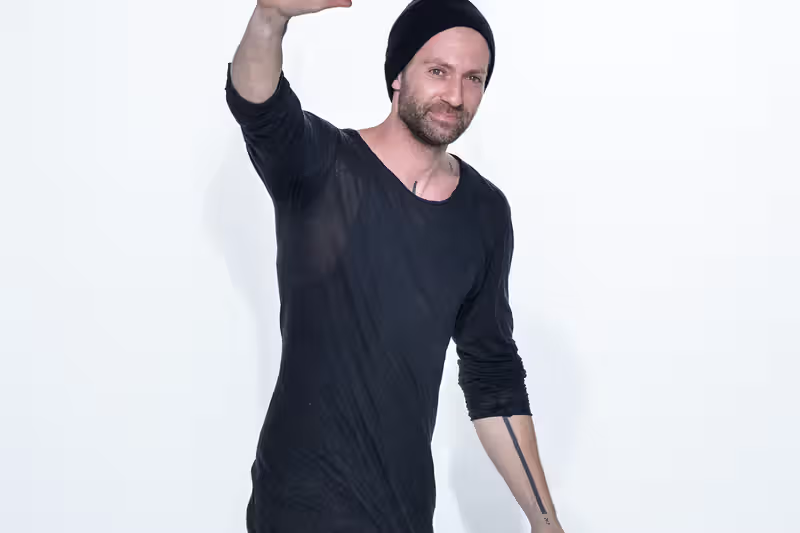
The Outsider at the Gate
Fashion loves a rebel, but it rarely tolerates true outsiders. Boris Bidjan Saberi doesn’t give a damn. Half Persian, half German, he built his empire of black leather, raw edges, and futuristic tailoring not in Paris or Milan but in Barcelona—far from the self-congratulating circus of the mainstream fashion capitals.
He isn’t a household name like Armani or Gucci, and that’s the point. His cult is global, underground, obsessive. The people who know, know. In an industry addicted to hype cycles, Saberi’s reputation has been forged in the opposite direction: through consistency, authenticity, and a refusal to compromise. He designs not for the masses, but for the tribe.
Blood, Sweat, and Waxed Cotton
Saberi launched his eponymous label in 2007, after cutting his teeth at Parsons Paris and absorbing a cocktail of Persian heritage, German precision, and the raw energy of Barcelona’s underground. From the start, his clothes weren’t just garments—they were objects. Sculptures made of leather, waxed cotton, distressed wool, and hand-treated fabrics that looked as if they had survived the apocalypse and come back stronger.
Where other designers talk about “collections,” Saberi talks about experiments. Each season is another laboratory session in fabric alchemy—pigments hand-dyed until the fibers look burned, leathers treated until they feel fossilized, seams exposed like scars. His pieces aren’t meant to be pristine. They’re meant to live, breathe, decay, and evolve with the person wearing them.

The Language of the Underground
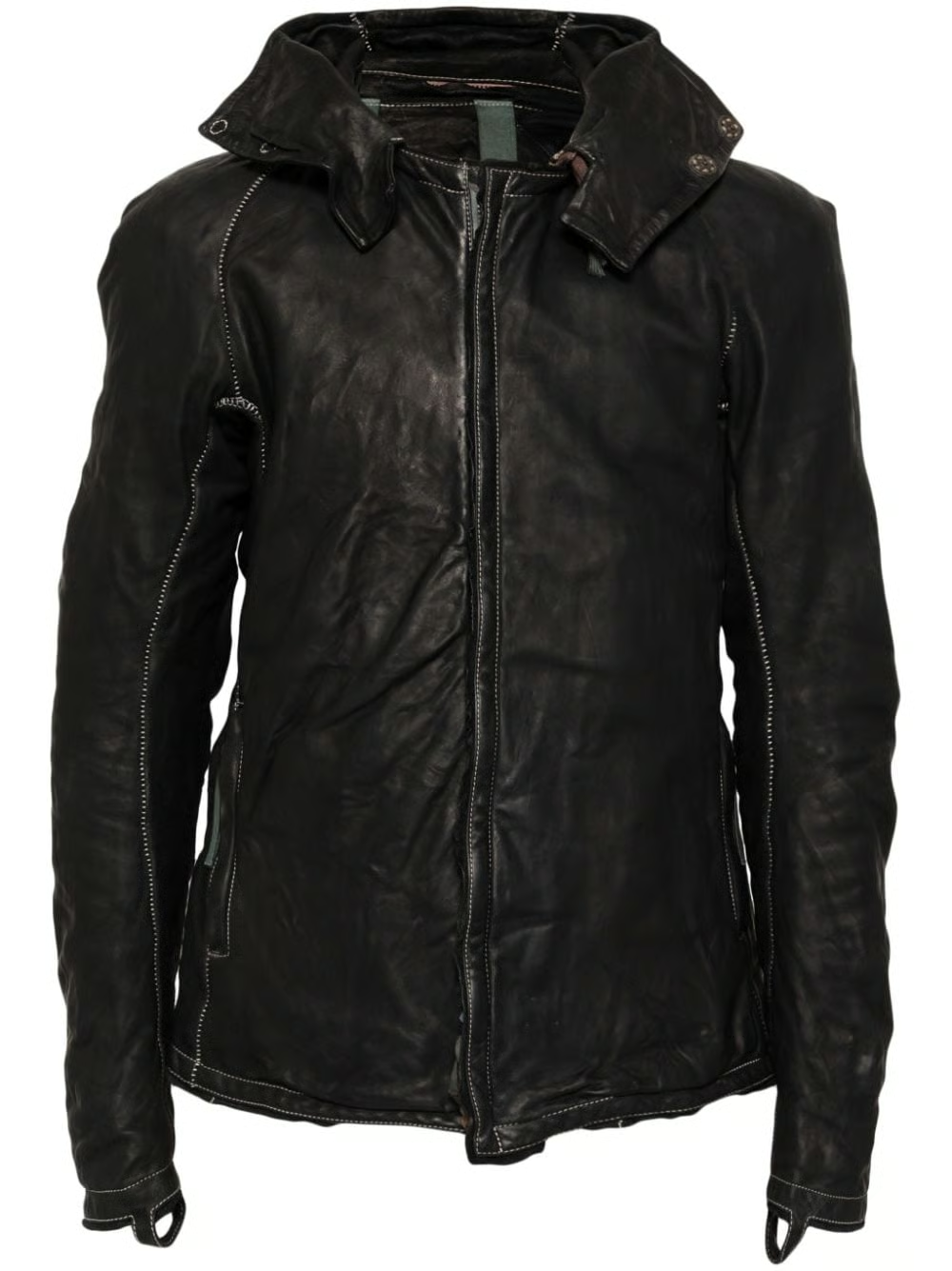
BBS (as insiders call the brand) carved out its place in the holy trinity of dark avant-garde fashion alongside Rick Owens and Carol Christian Poell. But Saberi’s voice is distinct. Where Owens leans into brutalist architecture and Poell into surgical deconstruction, Saberi fuses utility and spirituality. His work feels tactical, almost militaristic, but never cold. The straps, zippers, and modular pockets nod to survival gear. The silhouettes nod to monks. A Boris jacket can look like something you’d wear to escape a riot—or to meditate on a mountaintop.
This duality is his secret weapon. He isn’t designing for the runway. He’s designing for the journey. His garments whisper: “The world may be falling apart, but at least you’ll look like a warrior when you walk through the fire.”
Reverence Without Compromise
The fashion system tried to lure him in. Paris Fashion Week, celebrity stylists, sneaker collabs. He did some of it—collaborating with Salomon on footwear, Adidas on technical gear—but never watered down the core DNA. He doesn’t chase trends. He doesn’t do cheap tricks. He builds a fortress of authenticity and lets the world come to him.
And they do. From Berlin to Tokyo, from Los Angeles to Seoul, the cult of BBS is global. Walk into one of his flagship spaces or the stockists who revere him—Antonioli, Darklands, H Lorenzo—and you’ll find devotees treating his clothes like relics. Try one on, and you’ll understand: the cut, the weight, the sensation of armor. It’s not about “fashion.” It’s about belonging to something greater.

The Aesthetic of Survival
Saberi’s collections read like field manuals for a collapsing world. Colors rarely stray beyond black, grey, sand, rust—the palette of dust and ruins. Materials are raw, often brutal. Stitching is exposed. Edges are frayed. This isn’t minimalism; it’s survivalism.
Yet somehow, within this hard shell, there’s poetry. A Boris coat drapes like calligraphy. A pair of pants can feel monastic, almost ceremonial. His Persian roots bleed into the work, not as surface-level “inspiration” but as philosophy—an attention to ritual, a reverence for the handmade, a sense that clothing can be sacred.
Influence in the Shadows
Boris Bidjan Saberi will never flood Instagram feeds like Balenciaga. He isn’t interested in virality. His influence works differently—through whispers, not shouts. You see it in the wave of younger designers chasing “techwear” aesthetics, in the rising popularity of modular clothing, in the obsession with artisanal production and hand-treated fabrics. Many of them are borrowing from the BBS playbook, whether they admit it or not.
Even in mainstream fashion, the shadow of Saberi looms. The survivalist aesthetic, the blending of utility and high fashion, the fetishisation of craftsmanship—all roads lead back to his studio in Barcelona, where every garment is still made by hand, with precision, ritual, and zero compromise.
The Last Word
In an industry bloated with noise, Boris Bidjan Saberi remains a quiet storm. He doesn’t chase attention. He doesn’t explain himself. He builds, he creates, he refines. And in doing so, he’s built one of the most respected, revered, and fiercely loyal followings in modern fashion.
To wear Boris isn’t just to wear clothing. It’s to step into a philosophy. To embrace the scars, the grit, the imperfection of life, and to carry them like armour.
David Bowie taught us to become whoever we wanted. Boris Bidjan Saberi teaches us how to endure it once we get there.


